Clever Games Rebus Puzzles is a free online word-picture puzzle that asks you to read the position, size, repeat and direction of words and icons as a phrase. Solve rebus puzzles with answers and explanations from Easy to Hard, play the rebus of the day, or build your own rebus puzzle to share, with no sign-up.
How to play rebus puzzles online?
Look at the picture, work out which phrase it spells, type it into the answer field and press Check. The first rebus is already on the board when the page opens, so you can start straight away.
- Choose Classic, then pick Easy, Medium or Hard. A series is ten rebuses at that level.
- Study the picture. Ask what the layout is doing to the words: one above another, one inside another, one repeated, one backwards, or one larger or smaller than its neighbor.
- Type the phrase you think it shows and press Enter or select Check. A wrong guess shakes the field and leaves the picture where it is.
- Stuck? Select Hint. The first press names the trick, such as “Look at the position”. The second press shows the first word of the answer.
- Still stuck? Select Reveal to see the answer. After any answer or Reveal, one line explains how the picture reads.
- Select Next rebus (or press Enter once the answer is open) to continue.
On your first visit a short first-move tutorial points at the picture, the answer field and the Hint and Reveal buttons. You can skip it at any time.
The stacked layout is the classic way to read a rebus. The position of the words is part of the message, and many rebuses follow the same logic.
What are the rules of rebus puzzles?
Each picture has one intended phrase, plus a list of alternative wordings that are also accepted. Your answer is compared in a forgiving way: capital letters, punctuation and articles such as “a”, “an” or “the” do not matter. A different phrase with a similar meaning is not accepted unless it is on the picture’s list of accepted answers.
Guesses are never limited. A wrong guess shakes the answer field, the picture stays, and nothing counts your mistakes. On answers of six letters or more, one typo is forgiven. There is no losing state and no time limit: a clock beside the puzzle only counts up, and you can pause it.
Reveal shows the answer and its explanation, but that rebus does not count as solved. After a series of ten, the result panel shows how many you solved without Reveal and gives a rating in three steps. Hints and wrong guesses never lower it. The panel offers Play again, Harder level, Try another puzzle and Share.
Pictures are drawn as scalable vector graphics, so every word stays sharp whether you view the board on a phone, a tablet or a large monitor, even at 300% zoom.
Which levels and modes can I choose?
Classic mode has three levels, and the Rebus maker is a separate mode for building your own picture. The rebus of the day is a one-picture challenge that everyone shares on the same date.
| Mode or level | What you get | What the difficulty means |
|---|---|---|
| Easy rebus puzzles | Series of ten pictures, 150 in the set | One position, repeat or icon is enough to read the phrase |
| Medium rebus puzzles | Series of ten pictures, 150 in the set | You may need to read position and size together |
| Hard rebus puzzles | Series of ten pictures, 100 in the set | Expect several tricks at once, or sound-alike clues |
| Rebus of the day | One rebus per date, the same for everyone | Changes at 00:00 UTC; choose Daily in the Mode list |
| Rebus maker | A rebus you design, downloaded or shared as an image | No score and no win; the result is the picture itself |
| Rebus puzzles with answers list | Rebuses by level further down this page | Open any entry to see its answer and explanation |
The set holds 400 rebus puzzles in total, and 113 of them include simple drawn icons. Easy, Medium and Hard describe how many tricks a picture combines. They are not a measured ranking of how long players take. If you finish a level and want more, choose Harder level or start a new series at the same one.
The rebus of the day is picked from a fixed rotation by date, so you get a new picture every day without registering. When you solve it, the page shows the answer, the explanation and “You solved today’s puzzle. Tomorrow: a new puzzle.” If you come back later that day, the page shows that today’s daily is done. Past dates are not kept, so each day’s rebus can only be played on its own date.
What tips help with a hard rebus?
Say what you see in plain words before looking for the phrase. “Letters going down a staircase” and “a word with a gap in the middle” are better first notes than a wild guess at the idiom. Then try the likely trick families in turn.
- Position. One word above or below another often means “over”, “under” or “on top of”. A word at the far end of a line can mean “beginning” or “end”.
- Inside and around. A small word within a larger one usually means “in”, “within” or “inside”. A word wrapped around another can mean “surround” or “circle”.
- Repetition. A word shown several times hints at a number or at words such as “again”, “too much” or “over and over”.
- Direction. A word written backwards can mean “reverse”, “back”, “mirror” or “behind”. Upside-down text can suggest “down” or “upset”.
- Size. A large word beside a small one can mean “big” and “little”, or “more” and “less”.
- Sound. Some pictures rely on how the pieces sound. Say the parts aloud and let them run together.
When you are down to a few candidates, type the one you like best; a wrong guess costs nothing. If you are still stuck after both hint steps, use Reveal and read the explanation. It shows the reasoning, which makes the next picture easier.
What is the Rebus maker?
The Rebus maker turns a phrase of your own into a picture you can share. Type a phrase of up to 40 characters (letters and spaces), choose one of five layout templates and watch the preview. Then download the picture as a PNG image, or use your device’s share option where it is available.
- Over and under stacks one word above another.
- Inside places a smaller word within a larger one.
- Repeat draws one word several times.
- Backwards flips a word so it reads from the other direction.
- Big and small shows one word large and another small.
The picture is built on your device by the same engine that draws the puzzles. Your phrase is checked against a word filter first, so a phrase containing a blocked word cannot be drawn. It is not stored anywhere and it is not published on the site. To make a good rebus puzzle, pick a short, well-known phrase and choose the template that tells its story most directly.
Who are rebus puzzles especially useful for?
A rebus suits anyone who likes a short, self-contained brain teaser, and it works well in a few particular situations.
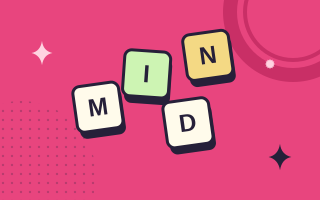
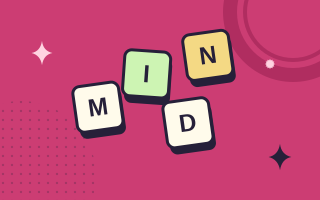
- Students and language learners who meet idioms in a new way. Seeing “mind over matter” as a picture, then reading the one-line explanation, ties the phrase to a memorable image.
- Teachers looking for a printable set. Print gives a sheet with the rebuses of the current series (ten in Classic), followed by a separate page with the answers and explanations, without the site header or footer.
- Families who want an easy challenge for the whole family. Start at Easy and take turns guessing.
- Seniors and word-puzzle fans who enjoy something between a crossword and a riddle, with no countdown and no pressure.
- Commuters and break-takers with a few minutes. A round takes about a minute, and a single picture is a complete puzzle on its own.
What are the benefits of playing rebus puzzles?
Rebus puzzles give your vocabulary and lateral thinking a light workout. Reading a picture as a phrase means testing several ideas against one clue, which is a small exercise in logic, and keeping the idiom in mind while you look at the layout is a small exercise in focus.
Every rebus comes with its answer and a one-line explanation, so you always learn why a picture works, not only what it says. Help is graded rather than all-or-nothing: the first hint names the trick, the second gives the first word, and Reveal shows the whole answer. The clock only counts up, with no countdown or limit, so you can think at your own pace.
The puzzles are free and need no account or sign-up, and your progress is saved on this device. You can play with a mouse, a finger or a keyboard: type your answer, press Enter to check it, and press Enter again for the next rebus.
Where do rebus puzzles come from?
The word rebus comes from Latin and means “by things”: a message told with objects and pictures instead of letters. The idea is old. Medieval heraldry used picture puns, where a coat of arms hinted at the bearer’s name, and the same trick of reading pictures as sounds fills many modern rebus puzzles.
A rebus gives the same word two jobs. You can read its ordinary meaning, and you can look at how it is drawn. A word printed below another word can point to a phrase about being under something. A large letter, a blank space or a repeated symbol can supply the part the puzzle leaves unstated.
In this collection, the rebuses are designed from lists of common idioms and phrases, and every one is drawn from data as a vector picture, so it stays crisp at any size. Some use simple icons instead of words. For an unfamiliar arrangement, look first for the position or repetition that seems deliberate, then test a phrase that explains it.
Where can I find rebus puzzles with answers?
Here are thirty rebus puzzles with answers from the collection, ten at each level. Look at the picture, say the phrase out loud, then open it to check the answer and the reason it works. Play a series above to meet the rest of the 400 rebuses.
Easy rebus puzzles with answers
Easy rebus 1: show the answer
Answer: sunflower. A sun icon sits above FLOWER, so the picture reads sunflower.
Easy rebus 2: show the answer
Answer: teaspoon. A tiny SPOON is drawn right under TEA, showing a small tea spoon: teaspoon.
Easy rebus 3: show the answer
Answer: smile. Put a letter S in front of MILE and it becomes SMILE.
Easy rebus 4: show the answer
Answer: belief. A BEE plus a LEAF sounds like bee leaf, which is belief.
Easy rebus 5: show the answer
Answer: jellyfish. The word JELLY beside a fish icon makes jellyfish.
Easy rebus 6: show the answer
Answer: branch out. BRANCH plus OUT reads branch out.
Easy rebus 7: show the answer
Answer: port side. PORT is placed at the left-hand side of the frame: port side.
Easy rebus 8: show the answer
Answer: chatterbox. CHATTER is written inside a box, giving chatterbox.
Easy rebus 9: show the answer
Answer: second to none. SECOND is written directly to the left of NONE: second to none.
Easy rebus 10: show the answer
Answer: coastline. A line is drawn beneath COAST, so the picture reads coast line: coastline.
Medium rebus puzzles with answers
Medium rebus 1: show the answer
Answer: cornerstone. STONE is placed in the corner of the frame, so it is a cornerstone.
Medium rebus 2: show the answer
Answer: heart to heart. Two hearts with an arrow pointing from one to the other read as heart to heart.
Medium rebus 3: show the answer
Answer: sweet tooth. The word SWEET is set beside a tooth icon, giving sweet tooth.
Medium rebus 4: show the answer
Answer: put down. PUT is written down at the bottom of the frame, so the picture reads put down.
Medium rebus 5: show the answer
Answer: walking on air. WALKING is stacked above AIR, so it is walking on air.
Medium rebus 6: show the answer
Answer: train. T plus RAIN makes TRAIN.
Medium rebus 7: show the answer
Answer: cold feet. COLD is written directly above FEET, so the picture reads cold feet.
Medium rebus 8: show the answer
Answer: home sweet home. A house icon on each side of SWEET gives home sweet home.
Medium rebus 9: show the answer
Answer: above water. ABOVE is written over WATER: above water.
Medium rebus 10: show the answer
Answer: one way street. ONE, a single arrow showing one direction, and STREET make one way street.
Hard rebus puzzles with answers
Hard rebus 1: show the answer
Answer: read between the lines. READ sits between a line drawn above it and a line drawn below it, so it is read between the lines.
Hard rebus 2: show the answer
Answer: top of the charts. TOP is stacked above CHARTS, so it sits at the top of the charts.
Hard rebus 3: show the answer
Answer: top drawer. DRAWER is placed at the top of the frame, giving top drawer.
Hard rebus 4: show the answer
Answer: out of the blue. OUT OF sits outside a box holding THE BLUE, so the picture reads out of the blue.
Hard rebus 5: show the answer
Answer: snowed under. UNDER is stacked beneath SNOWED, so it is snowed under.
Hard rebus 6: show the answer
Answer: actions speak louder than words. ACTIONS is drawn much larger than WORDS, so actions speak louder than words.
Hard rebus 7: show the answer
Answer: beforehand. BEE plus FOUR plus a hand sounds like be-fore-hand, giving beforehand.
Hard rebus 8: show the answer
Answer: overcharge. OVER is stacked above CHARGE, so the picture reads overcharge.
Hard rebus 9: show the answer
Answer: put up with. PUT is stacked up above WITH, giving the phrase put up with.
Hard rebus 10: show the answer
Answer: in the middle of nowhere. MIDDLE is placed between NO and WHERE, so it sits in the middle of nowhere.
What are the most frequently asked questions about rebus puzzles?
What is a rebus?
A rebus is a puzzle that expresses a word or phrase through pictures, symbols, letters and layout instead of plain text. You work out the phrase by describing what the picture shows and how its parts are arranged.
How do you solve a rebus puzzle?
Describe the layout in plain words first, such as one word over another, inside another, repeated, backwards or in different sizes. Match that description to a phrase, say the parts aloud in case the clue is a sound, then type your guess. Hint is there if you need it.
Are these rebus puzzles free?
Yes. All levels, hints, the rebus of the day, printing and the rebus maker are free, with no account and no sign-up.
Do the rebus puzzles come with answers?
Yes. Each rebus has an answer and a one-line explanation. You see both after you solve it or when you select Reveal, and the list of rebus puzzles with answers on this page shows a first selection of them.
Does my answer have to be spelled exactly right?
No. Capital letters, punctuation and articles such as “a”, “an” or “the” are ignored. On answers of six letters or more, one typo is forgiven.
What happens if I reveal the answer?
You see the answer and the explanation, and that rebus does not count as solved. Nothing stops you from continuing with Next rebus.
What is the rebus of the day?
It is one rebus per date, the same for everyone. It changes at 00:00 UTC. Choose Daily in the Mode list to play it.
Can I make and share my own rebus?
Yes. Use the Rebus maker: type a phrase of up to 40 characters, pick one of five templates and download the picture as a PNG, or use your device’s share option.
Can I print rebus puzzles?
Yes. Print opens your browser’s print dialog with a sheet of the rebuses in your current series and a separate page with the answers and explanations.
Does it work on my phone?
Yes. The picture, the answer field and the Check button fit on a phone screen, and you can play with a finger, a mouse or a keyboard.